
What Is H1 Transfer and How It Really Works
What is H1 transfer? Learn how H-1B portability works, when you can start, and what to prepare before talking to counsel on HeyAtty.
An H-1B transfer isn't a transfer of your visa from one employer to another. It's a new employer petition, and if you're still in valid H-1B status, portability can let you start the new job once the new employer properly files and USCIS receives a non-frivolous Form I-129, rather than making you wait for final approval.
That's the part many people don't hear clearly when they get a new offer. Someone says, “You can transfer your H-1B,” and it sounds like moving a phone number from one carrier to another. Clean, automatic, almost administrative.
But that isn't how it works.
If you're reading this, you may be in one of a few very real situations. You have an offer and want to know when you can resign. You were laid off and the clock is already running. Or you're comparing roles and trying to figure out whether a change in duties affects your options. In each of those cases, the phrase “H-1B transfer” can be misleading because it makes the process sound simpler than it is.
The better mental model is portability with a new filing. Your work authorization may continue in a specific way under the law, but the new employer still has to prepare its own petition, support its own job offer, and meet its own compliance duties.
Table of Contents
- Introduction Why H-1B Transfer Confuses So Many People
- What an H-1B Transfer Actually Means in Plain Language
- How a Transfer Differs From an Initial H-1B and an Extension
- Who Can Use H-1B Portability and When You Can Start Work
- Common Reasons People File an H-1B Transfer
- Tricky Situations That Change Your Transfer Strategy
- Next Steps to Find the Right Counsel on HeyAtty
Introduction Why H-1B Transfer Confuses So Many People
A lot of confusion starts with the word transfer itself.
You get an email from a recruiter. The interviews go well. Then someone asks, “Do you need sponsorship?” You answer, “I already have H-1B. I just need a transfer.” That answer is common, practical, and understandable. It's also where the legal fog begins.
Most workers use “transfer” as shorthand for “I want to change employers without going through the whole process from scratch.” That shorthand is useful in conversation. It's less useful when you're trying to decide your start date, whether you can stop working after a layoff, or what documents the new employer needs.
An H-1B transfer is not a handoff of an existing visa approval. It's a job-change process built around a new employer's filing and a portability rule that may let you begin work before approval.
That distinction matters because people often ask the wrong follow-up question. They ask, “Can my visa be moved?” The more accurate question is, “Can the new employer file a valid change-of-employer petition in time, and can I work under portability once USCIS receives it?”
The everyday misunderstanding
Think about two workers.
One has a new offer while still working in valid H-1B status. The other was just laid off and is trying to line up a new sponsor quickly. Both may say they need an H-1B transfer. But their legal posture is different, their timing risk is different, and their start-work rules may be different too.
That's why simple definitions often leave readers stranded. They explain the label but not the mechanics.
A better way to think about it
If you've been searching what is H1 transfer, the most useful answer isn't a one-line definition. It's a working model you can carry into real decisions:
- Your visa status doesn't get reassigned like property
- The new employer files its own petition
- Your ability to start may depend on filing and receipt, not final approval
- Timing becomes critical if your prior employment has ended
Once you see those pieces together, the process starts to make sense. The rest of this article will keep that same plain-language approach and focus on the points that usually trip people up.
What an H-1B Transfer Actually Means in Plain Language
The cleanest way to understand an H-1B transfer is this: you move, not the petition.
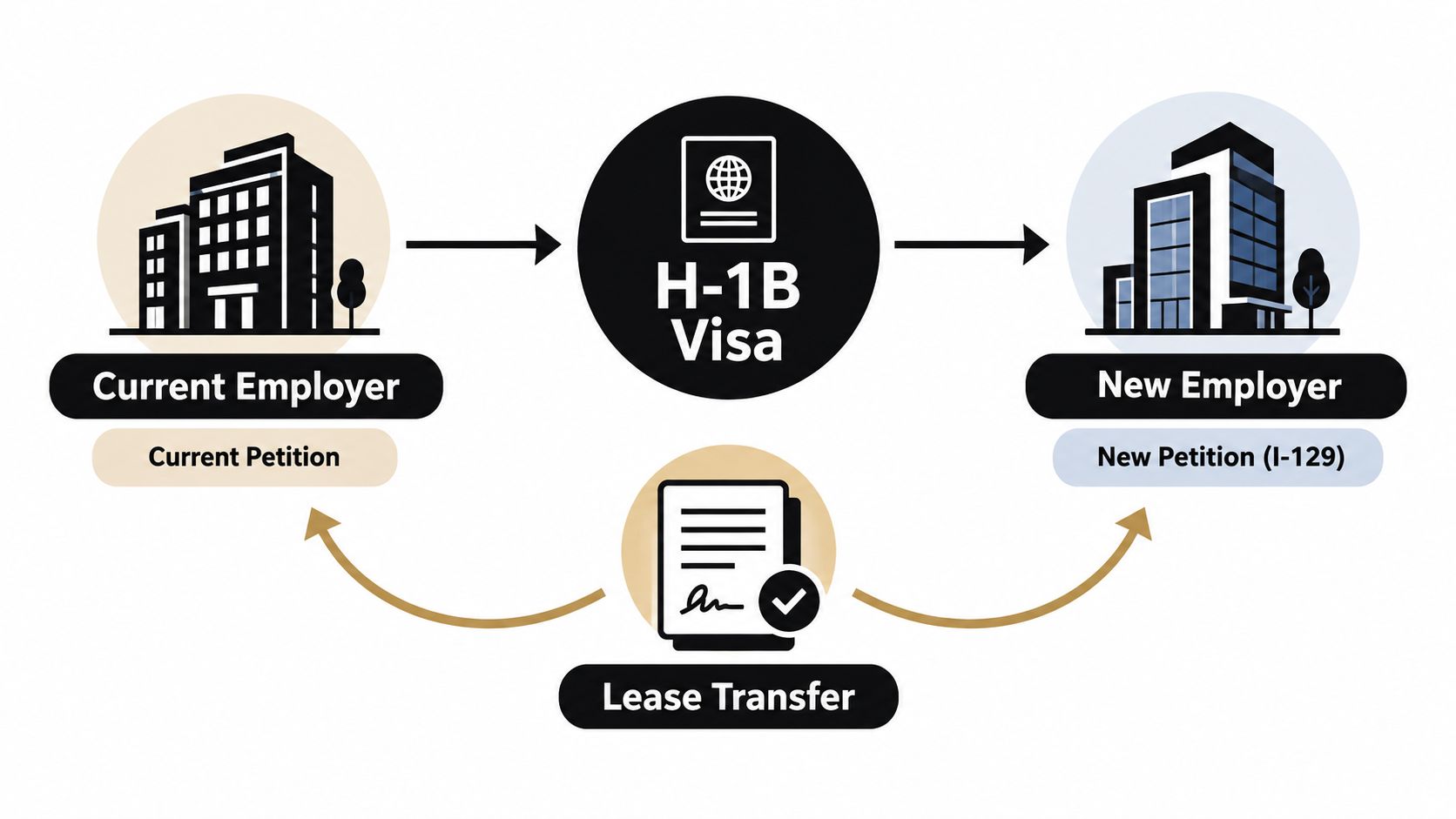
The prior employer's approval doesn't get handed over to the next company. Instead, the new employer files a new change-of-employer petition, usually on Form I-129 with a certified Labor Condition Application, because the worker changes jobs but the earlier petition stays tied to the old employer. That's the core point explained in Murthy's discussion of why H-1Bs cannot literally be transferred.
A plain analogy that usually helps
Think of it less like transferring a train ticket and more like signing a new lease.
You may already be lawfully living in the country, and that history matters. But your new landlord still has to approve a new lease for a new address on new terms. In the H-1B context, the new employer has to support the new role, wage, and worksite for its own filing.
That's why “transfer” can be a useful conversational shortcut but a poor legal description.
Core idea: The worker carries experience and status history into the next case, but the next employer carries the filing burden.
What the new employer is really taking on
A new H-1B filing is its own compliance event. The employer has to stand behind the position it is offering, not just rely on what the prior company already got approved.
That usually means attention to things like:
- Job role: The employer needs a role it can support as qualifying for H-1B treatment.
- Wage and LCA: The filing normally includes a certified Labor Condition Application tied to the offered position.
- Worksite details: The location of the job matters because compliance follows the new employment setup, not the old one.
This is why readers who search what is H-1 transfer often feel confused after reading generic summaries. They expect an administrative move. What they have is a fresh employer-sponsored case built on portability rules.
Why this matters in practice
If the new employer treats the case casually, problems can follow. A weak job description, mismatch in worksite details, or sloppy filing can affect whether the petition is supportable.
For the worker, that means one practical mindset shift. Don't think, “I already have H-1B, so this should be automatic.” Think, “I already have H-1B history, and the new employer still needs to file a solid new case.”
How a Transfer Differs From an Initial H-1B and an Extension
People often group several different immigration actions under one mental bucket. That's understandable, but it causes mistakes. A transfer, an initial H-1B, and an extension answer different questions.
An initial H-1B asks whether a person can be placed into H-1B classification for the first time through that employer. A transfer asks whether a new employer can petition for someone who is already in H-1B employment history. An extension or amendment usually deals with time or changes involving the same employer.
H-1B Initial vs Transfer vs Extension at a Glance
| Category | Initial H-1B | H-1B Transfer | Extension or Amendment |
|---|---|---|---|
| Main purpose | Start H-1B employment with an employer for the first time | Change from one employer to another | Continue or update H-1B employment with the same employer |
| Who files | The sponsoring employer | The new sponsoring employer | The current employer |
| What changes | Entry into H-1B employment structure | Employer changes | Time period, or details of the same employment relationship |
| Worker's question | “Can this employer place me in H-1B?” | “Can I change employers?” | “Can I stay longer or update my current case?” |
| Core review focus | Whether the employer's petition is supportable | Whether the new employer's petition is supportable | Whether the same employer can continue or adjust the existing employment setup |
Where people mix them up
A worker may say, “My H-1B needs renewal at the new company.” That phrase blends two separate ideas. If the person is changing employers, the key event is the change-of-employer filing. If the same employer is continuing the job, the issue is closer to an extension.
Another common mix-up involves amendments. If the same employer changes something material about the role or work arrangement, that may call for an amendment analysis rather than a transfer analysis.
If your employer is changing, think transfer. If your employer is staying the same and the timeline or terms are changing, think extension or amendment.
Why labeling your case correctly helps
The right label keeps your research focused. It also helps you ask better questions when you speak with HR or counsel.
Instead of saying, “I need to renew my H-1B at a new company,” you can say, “I'm changing employers and want to confirm whether the new company is preparing a change-of-employer petition.” That one shift tends to make the next conversation much clearer.
Who Can Use H-1B Portability and When You Can Start Work
This is the section most readers care about most: when can you start working for the new employer?
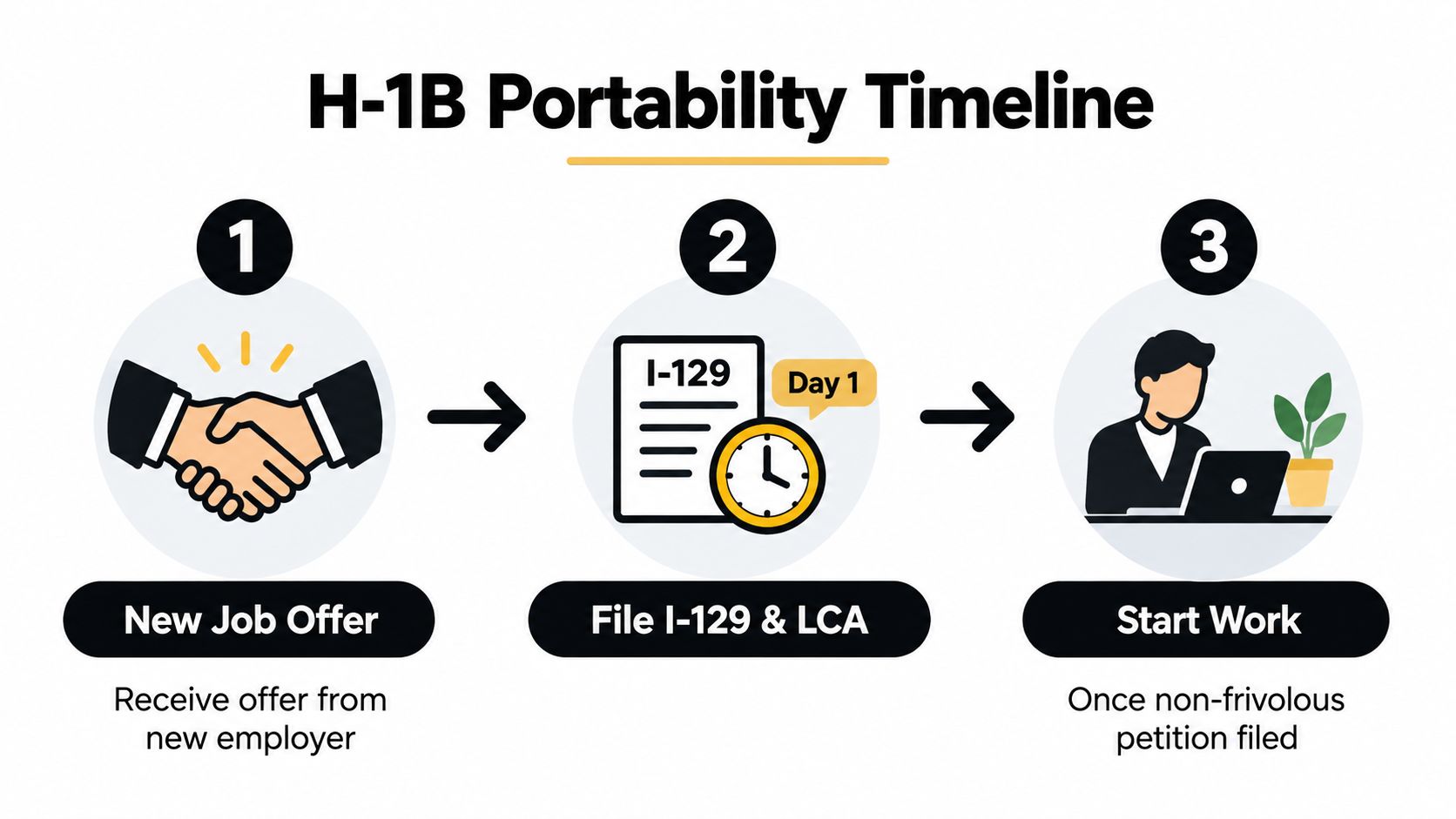
Under the H-1B portability framework, a worker may generally start the new job once the new employer properly files a non-frivolous Form I-129 and USCIS receives it, or on the requested start date, whichever is later, if the worker remains in valid status. USCIS explains this portability rule on its H-1B specialty occupations page. This framework is rooted in AC21 Section 105, codified at 8 U.S.C. §1184(n), and it's one of the key reasons H-1B job mobility works at all under current law.
The start rule people often misunderstand
Many workers hear “you don't have to wait for approval” and stop there. That's only half the rule.
The practical trigger is the new filing being properly made and received, assuming the worker still qualifies for portability. A discussion of that compliance threshold appears in Ellis Porter's explanation of H-1B transfer portability, which notes that valid status and the absence of unauthorized employment matter.
Here's the simple cause-and-effect version:
- Valid status plus proper filing and receipt: portability may allow work to begin
- Out of status or defective filing: portability may not protect the start of work
- Unauthorized employment history: that can affect whether the rule helps at all
Why the receipt matters
For many readers, “received” is the most important word in the whole process.
The law doesn't treat a casual draft, unsigned packet, or wishful mailing as enough. The filing has to be real, supportable, and properly submitted. That's why employers often track the filing date and receipt closely before confirming a start date.
Practical rule: A job offer alone doesn't authorize work. Portability depends on status plus a properly filed and received petition.
When you need careful legal review
Some cases look simple until one fact complicates them. A prior status gap, a work-history issue, or uncertainty about what was filed before can change the answer quickly.
If your facts aren't straightforward, an immigration lawyer consultation can help you check the timing and portability question before you resign or start. That's especially useful when HR is speaking in broad terms and you need an answer tied to your own dates and documents.
Common Reasons People File an H-1B Transfer
Most H-1B transfers don't begin with legal theory. They begin with a life event.
A manager leaves and the team culture changes. A better role opens up. A company restructures. A layoff lands without much warning. In each case, the worker isn't trying to do something exotic. They're trying to keep a career moving while staying compliant.

A new role with more room to grow
One common story is the worker who already has stable H-1B employment but wants a stronger position elsewhere.
Maybe the new job offers better alignment with their background. Maybe the title is more advanced. Maybe the new company can support the work more clearly. In that situation, the transfer process becomes the bridge between opportunity and lawful employment continuity.
A layoff that forces quick action
Another common story is much more stressful. The worker didn't plan to move. The company ended employment, and now every day matters.
The legal issue isn't just “Can another company hire me?” It becomes a coordination problem involving offer timing, document collection, and filing speed. That's why transfer planning after a layoff feels very different from a normal job change, even though both use the same general label.
Internal business changes that spill into immigration planning
Sometimes the worker likes the work but the corporate structure changes around them. A team is reorganized. A business unit is sold. A new legal entity becomes involved in the employment setup.
In those moments, people often discover that immigration paperwork follows the actual employer relationship, not just the day-to-day work they perform.
A transfer filing often shows up at the exact moment a worker wants normal career movement. The paperwork matters because the life event behind it matters.
Role evolution and relocation
Some workers also start looking into transfer because the next offer changes more than the employer name. The position may involve a different focus, different client environment, or a different location. Those changes don't always block a move, but they do make the review more fact-specific.
That's why H-1B transfer decisions are rarely just about whether someone already has H-1B. They're about whether the new employment setup can be documented and filed cleanly.
Tricky Situations That Change Your Transfer Strategy
The simple internet answers usually stop helping.
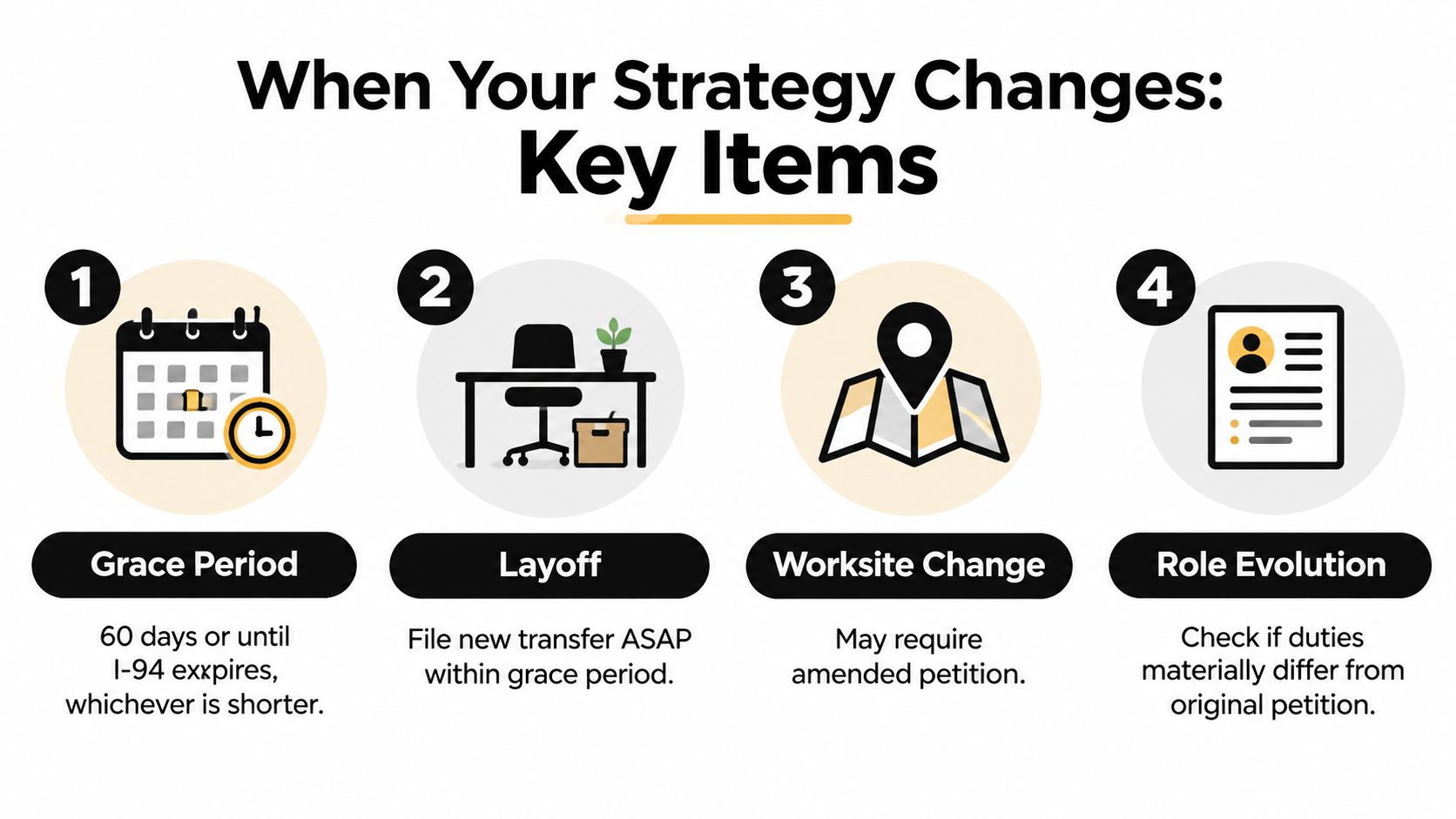
The first major pressure point is job loss. An H-1B worker who loses employment may generally remain in the United States for up to 60 days, or until the I-94 expires, whichever is shorter, while seeking a new sponsor or another immigration option, as described in VisaVerge's discussion of the 60-day window and filing timing. That grace window is central to transfer planning because it affects whether a later filing can preserve continuity.
Layoff timing isn't as simple as the announcement date
A lot of people ask, “Does the clock start when I was told, or when I stopped working?” That question matters.
Independent guidance focused on H-1B transfer after layoff emphasizes that the grace period runs after employment ends, and that a worker generally can't work during that in-between period until the new filing is properly received. A plain-language discussion of those layoff edge cases appears in LayoffNext's explainer on H-1B transfer after layoff.
That means practical facts matter:
- Last actual day of employment
- Whether you are still in valid status
- Your I-94 expiration
- Whether severance changes money flow but not employment status
- Whether the new employer can file quickly
You may not be comparing identical jobs
Another edge case comes up when the new role isn't a neat copy of the old one.
A common user question is whether an H-1B move can happen between different occupational tracks, such as a move involving different SOC coding or materially different duties. Immigration.com notes that this question appears often enough to be called out directly in its H visa FAQ collection. The issue isn't whether change is forbidden. The issue is whether the new role can still be supported as a specialty occupation with consistent wage and worksite analysis.
A short decision checklist
If your case includes any of the facts below, your strategy usually needs more than a basic “just transfer it” answer:
- Recent layoff: Confirm the actual end of employment and check your grace-period timing against your I-94.
- Gap between jobs: Don't assume you can work while waiting. The timing of the new employer's receipt matters.
- Different duties: Review whether the new role still fits the legal framework for H-1B support.
- Worksite differences: A new location can change filing and compliance analysis.
If your questions spill across immigration and employment details, it may help to sort the issue first with a guide on what kind of lawyer you may need, especially when you're dealing with both layoff facts and visa timing.
Next Steps to Find the Right Counsel on HeyAtty
Once you understand what an H-1B transfer really is, the next challenge is practical. You need to organize your facts in a way that lets a lawyer or employer assess the case quickly.
Start with your timeline. Write down your current employer, your last day worked if employment ended, your I-94 validity, whether you already accepted a new offer, and whether the new employer has begun preparing the filing. A clean timeline often reveals the issue faster than a long narrative.
Gather the documents that shape the analysis
The most useful records are usually the ones that answer status, role, and timing questions.
Bring together items such as:
- I-94 record: This helps frame your current period of admission.
- Prior approval notices: These help show your H-1B history.
- Current and new job descriptions: These matter if the new role differs from the old one.
- Pay records and employment dates: These can help clarify maintenance of status questions.
- LCA and wage details, if available: These help the reviewing lawyer understand how the new employer is framing the position.
Focus on case fit, not just practice area
Many people waste time trying to guess the perfect legal category before they ever speak to someone. A better approach is to describe what happened in plain language.
If you're choosing counsel, look for signs that the person has handled facts close to yours. “Immigration law” is too broad to be useful on its own. A much better signal is experience with situations like employer changes, portability timing questions, or transfers after layoffs.
One option is HeyAtty's employment visa lawyer page, which points readers toward the broader process of finding immigration help for work-authorized matters. Its platform features include guided intake, profile comparison, pricing and availability visibility, and secure booking with consent-based information sharing.
Questions worth asking before you book
A short list of focused questions can save time:
| Question | Why it matters |
|---|---|
| Have you handled H-1B employer-change cases involving layoffs or tight timing? | It tests whether the lawyer has worked with portability pressure, not just routine filings. |
| What documents do you want before the first call? | It shows how they evaluate cases and how prepared you need to be. |
| How do you assess start-date risk? | It gets directly to the issue many workers care about most. |
| How do you handle cases where the new role differs from the prior one? | It helps uncover whether your role change needs deeper review. |
The calmer you can make the facts, the easier it is for someone to spot the issue. Dates, status, role, and filing stage usually matter more than long background explanations.
If you're trying to change employers, deal with a layoff, or figure out whether portability applies to your timeline, HeyAtty can help you compare vetted legal professionals, review availability and pricing, and book securely in one place. You can also use its guided intake and community Q&A to describe your H-1B transfer situation in plain language before your first consultation.